
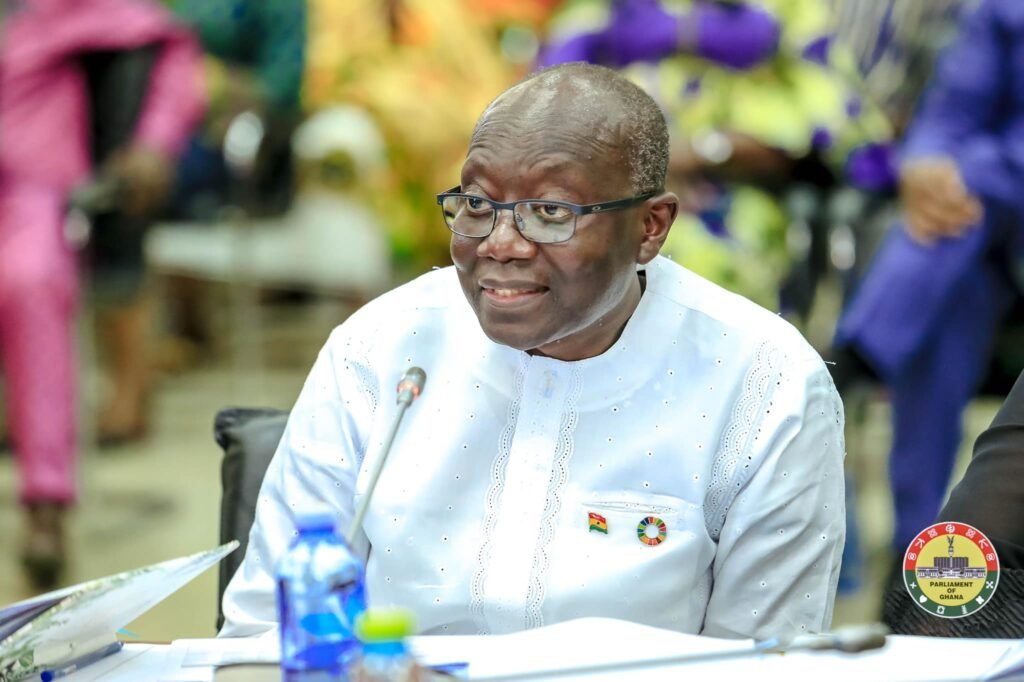
The Vice Chairperson of Parliament’s Public Accounts Committee (PAC) and MP for Mpraeso, Davis Ansah Opoku, has endorsed calls for former Finance Minister Ken Ofori-Atta to be prosecuted in absentia if he continues to evade questioning over ongoing corruption investigations.
According to the Mpraeso legislator, Ghana’s justice system should not be stalled simply because the former minister is outside the country.
“If Ken Ofori-Atta has questions to answer, he must avail himself to the authorities of the state and answer them,” Mr. Opoku said.
Davis Ansah Opoku stressed that Ofori-Atta, having once overseen the nation’s finances, should appreciate the importance of cooperating with lawful investigations and making himself available to state authorities.
The summit was held under the theme, “Corporate Institutions and Public Agencies as Pillars of Accountability: Strengthening Governance Systems for Sustainable National Growth.”
He argued that neither a foreign nationality nor immigration status shields an individual from prosecution under Ghanaian law.
“Even a foreigner who commits a crime in Ghana is subject to our laws. Therefore, the fact that someone has acquired American citizenship or obtained a green card does not mean that person cannot be punished under Ghanaian law,” he stated.
Mr. Opoku further questioned suggestions that prosecutors should wait for Ofori-Atta’s physical return before pursuing legal action.
“The idea that we must wait for Ken Ofori-Atta to return before he is prosecuted is problematic. We can try him in absentia. Even in his absence, the process can continue,” he said.
He also noted that evidence gathered by Ghanaian authorities could be shared with international partners, including U.S. authorities, to support any ongoing legal proceedings.
His comments come amid growing public debate over efforts to secure Ofori-Atta’s return to Ghana to answer allegations of corruption and other related matters under investigation.
Meanwhile, the former Finance Minister recently secured a legal boost in the United States after an immigration court approved his application to adjust his immigration status, a decision that moves him closer to obtaining lawful permanent residency in the U.S.