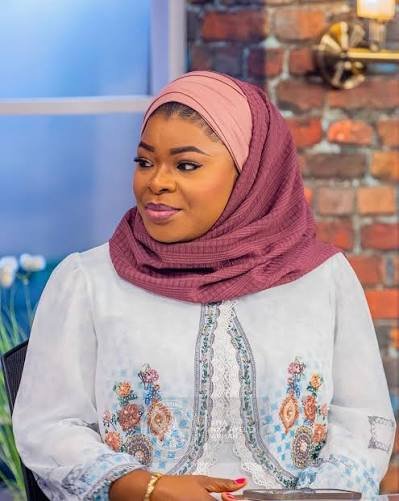
Deputy spokesperson for government communications , Shamima Muslim, has called for stronger collaboration between the media, government and security institutions to promote responsible security reporting and protect Ghana’s national security.
Speaking at a capacity-building workshop on responsible security reporting in support of Ghana’s national security priorities, under the theme “Media as a Strategic Partner in Preventive Security and Early Warning in Ghana,”Shemima Muslim said responsible security journalism should not be treated as the sole responsibility of the media.
She said government and security institutions also have a duty to provide timely, credible and coordinated information to the public, warning that delays in releasing verified information could create a vacuum for speculation.
“This means that responsible security reporting is not the media’s burden alone. Government and security institutions must communicate in a timely, credible and coordinated manner. When accurate official information is unnecessarily delayed, speculation could rightly fill the vacuum,” she said.
According to her, where sensitive operational information cannot immediately be disclosed, authorities should explain the limitations honestly while providing verified updates on developments.
She cautioned that contradictory statements from official institutions could undermine public confidence, particularly during periods of crisis when trust is most needed.
“Trust cannot be demanded during a crisis. It must be cultivated before the crisis. It must be built through consistent truthfulness as much as we can,” she stressed.
Media urged to prioritise accuracy over speed
Shemima Muslim also challenged journalists to resist the pressure to be the first to publish breaking security-related information at the expense of accuracy.
She acknowledged the growing influence of social media platforms, including TikTok, where information can spread rapidly, but urged professional media organisations to distinguish themselves through accuracy and credibility.
“To be right is better for our nation than being first,” she said.
She encouraged newsrooms to verify security alerts and sensitive information with multiple independent sources before publication.
She said journalists must also consider whether publishing particular information could compromise ongoing operations, reveal tactical details or unnecessarily inflame ethnic or religious tensions.
In an environment where virtually anyone can publish information online, she said, the media’s greatest strength must be its ability to provide trusted information and help de-escalate tensions.
Information integrity is a national security imperative
Shemima Muslim further described information integrity as a national imperative, warning that misinformation and inflammatory content could undermine peace, weaken institutions and turn legitimate disagreements into hostility.
She said meaningful national development cannot take place without peace, stability and information integrity.
“A country cannot rebuild confidence whilst falsehood is allowed to inflame communities, to weaken institutions, and to turn legitimate disagreements into hostilities, like we are seeing on social media,” she said.
According to her, protecting Ghana’s peace requires more than responding after violence has occurred.
It requires early warning, community engagement, credible public communication and a media capable of identifying danger without magnifying panic.
Responsible journalism key to Resetting Ghana Agenda
The Deputy Minister said responsible journalism is not peripheral to the government’s Resetting Ghana Agenda, describing it as one of its democratic foundations.
She noted that by exposing wrongdoing, amplifying neglected grievances, resisting disinformation and holding institutions accountable, the media helps rebuild the relationship between citizens and the state.
She stressed that the government does not expect the media to shield it from criticism.
“The Resetting Ghana Agenda does not ask the media to protect government from criticism. We ask all of us—government, media, security institutions and citizens—to protect Ghana from falsehood, from division, from insecurity and institutional decay.”
She reiterated the need for government to remain accountable while urging the media to uphold responsibility and professionalism in its coverage of security-related matters.
The capacity-building workshop forms part of efforts to strengthen journalists’ capacity to report on national security issues responsibly while supporting preventive security, early warning and peaceful conflict management in Ghana.