
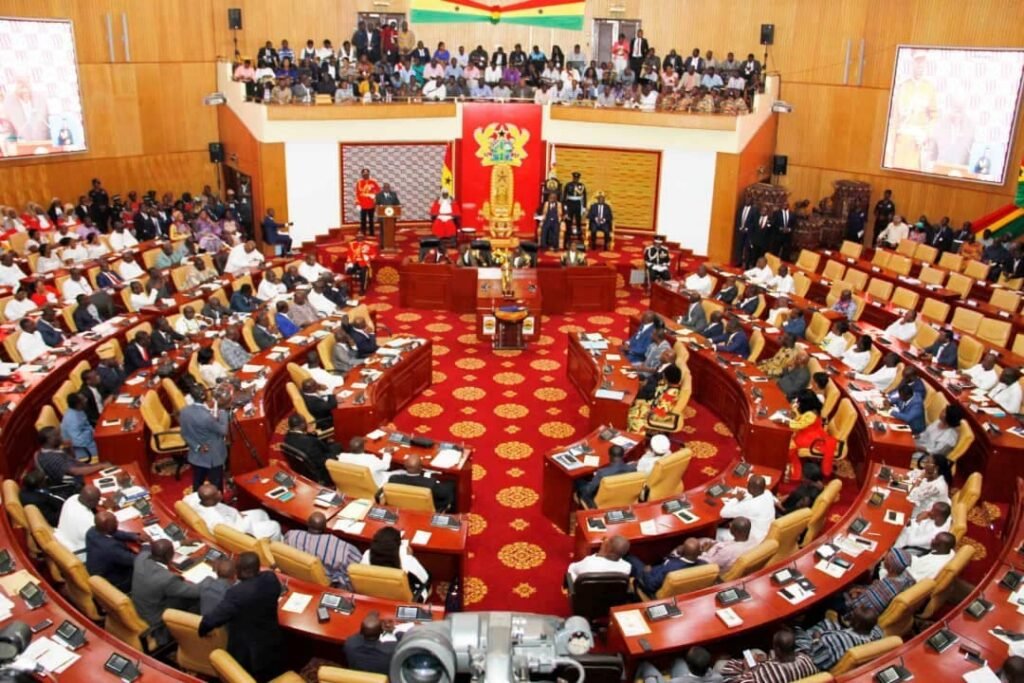
A sharp exchange erupted in Parliament on Thursday, July 16, as Minority Leader Alexander Afenyo-Markin and Attorney General Dr. Dominic Ayine locked horns over the proposed Public Tribunals Bill.
The disagreement centred on Clause 4 of the bill, which seeks to establish district and regional tribunals. The Minority argued that the provision could complicate Ghana’s justice system and create uncertainty in the administration of justice.
Leading the opposition, Mr. Afenyo-Markin described the proposal as “populist” and warned that it could lead to the creation of a parallel justice system.
“This provision will bring confusion to our justice delivery system. We already have a court structure that provides certainty and clarity. We do not need another system,” he told the House.
The Minority Leader also referenced a past Court of Appeal case involving Dr. Ayine, arguing that Ghana’s existing courts have established legal safeguards that should not be undermined by new tribunals.
He cautioned that the proposed tribunals could be used to jail people without the same level of legal protections available in the regular courts.
“I will not sit here as Minority Leader and allow this provision to stand,” he declared.
However, Dr. Ayine firmly rejected the claims, insisting that the bill is rooted in the 1992 Constitution and does not create a separate justice system.
He explained that Article 126 of the Constitution provides for an integrated judicial system that includes regional tribunals and other lower courts or tribunals established by Parliament.
“We are not creating a parallel justice system. We are simply implementing and strengthening provisions already contained in the Constitution,” the Attorney General said.
According to Dr. Ayine, the district tribunals will handle specific criminal matters, including offences related to illegal mining, while remaining part of the broader judicial structure.
The debate came as Parliament considered the bill clause by clause following the adoption of the committee’s report, setting the stage for further discussions on the future of the proposed tribunal system.