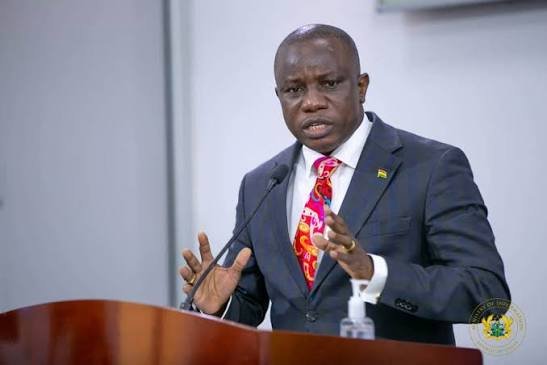
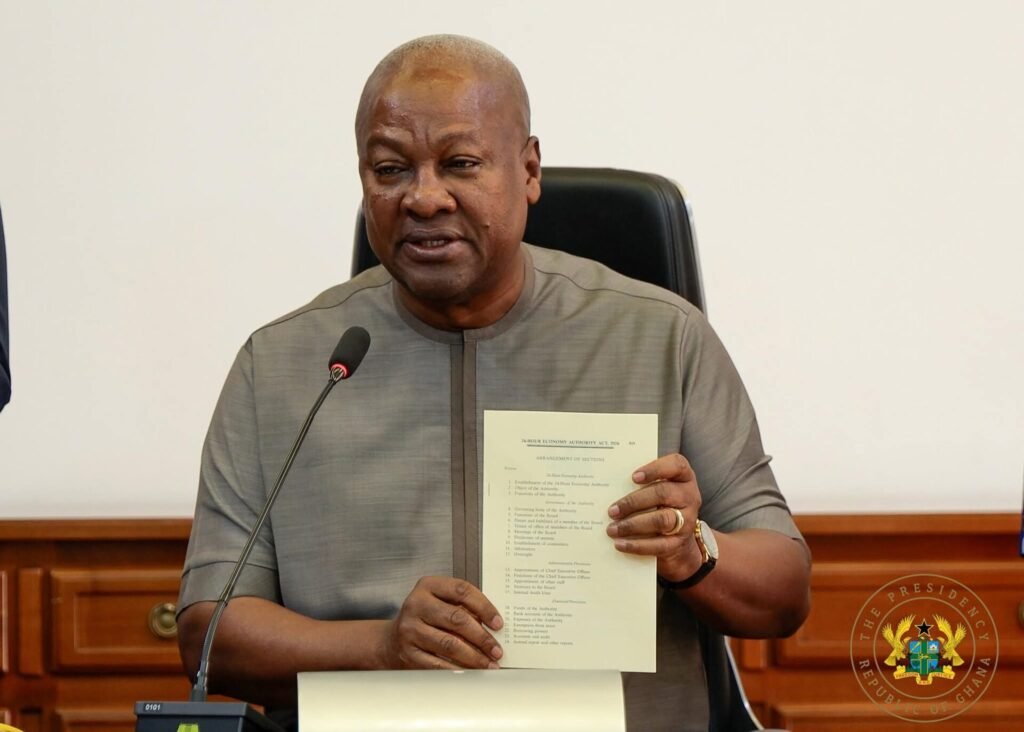
President John Dramani Mahama has officially assented to the 24-Hour Economy Authority Bill, 2025, marking a major step toward the implementation of one of his administration’s flagship policies.
According to him, the legal processes necessary to operationalise the policy have now been completed, and the focus must shift to execution.
The President signed the bill into law on Thursday, February 19, 2026, during a ceremony held ahead of the 13th Cabinet meeting at Jubilee House.

“It’s taken a while, but we needed to go patiently through the process to give legal effect to it. And so from now we must move from strategy to implementation,” said President Mahama.
He noted that both local and foreign investors have been waiting to know what incentives there are under the new framework.
“The business sector is waiting, Ghanaians investors and foreign investors are waiting. They want to see the package of incentives that we afford them so that they can invest more, expand productivity and create more employment for our young people.”
President Mahama also expressed appreciation to the lead official who worked on the legislation, Augustus Goosie Tanoh, and his team for their efforts in drafting and steering the bill.
“It is my pleasure to assent to this bill today. Let me congratulate the team that has been working on it. We’re very grateful.”
The newly assented Act establishes the 24-Hour Economy Authority as the central coordinating body responsible for the nationwide rollout of the policy.
The 24-Hour Economy policy is designed to transform Ghana’s productivity model by encouraging businesses, public institutions and industries to operate in shifts around the clock.
The initiative aims to boost industrial output, stimulate private sector investment, reduce unemployment particularly among the youth and maximise the use of national infrastructure.