Former Minister of Environment, Science, Technology and Innovation, Professor Kwabena Frimpong-Boateng, a Founding member of the New Patriotic Party (NPP) Chairman Dr. Nyaho Nyaho-Tamakloe, and a former Minister of Education Dr. Christine Amoako-Nuamah have filed a suit at the Supreme Court, challenging the constitutionality of internal elections in Ghana’s major political parties.
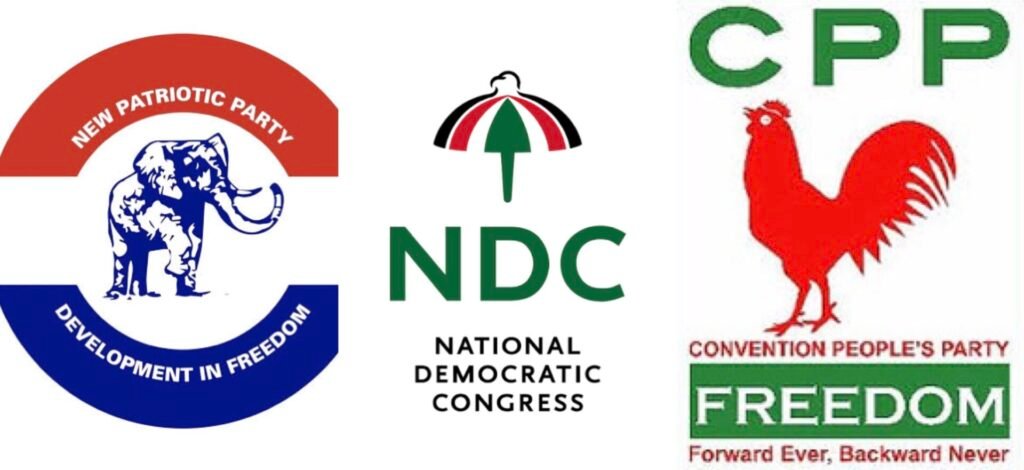
The writ, filed on January 26, targets the New Patriotic Party (NPP), National Democratic Congress (NDC), and Convention People’s Party (CPP), alongside the Electoral Commission of Ghana and the Attorney-General Dominic Ayine, over what the plaintiffs describe as undemocratic internal electoral systems that disenfranchise ordinary party members.
The three plaintiffs argue that limiting the election of presidential and parliamentary candidates to selected delegates violates Article 55(5) of the 1992 Constitution and the Political Parties Act, 2000, which require political parties to be organised in accordance with democratic principles.
In the writ, the plaintiffs state that:
“The Plaintiffs challenge the constitutionality of the method adopted by the 1st, 2nd and 3rd Defendants for the election of their presidential candidates or flagbearer.”
According to the suit, the current delegate-based systems permit only a small fraction of party members to vote, typically executives, office holders, and selected delegates, thereby excluding thousands of ordinary members in good standing.
The plaintiffs argue that this structure creates what they describe as a “privileged voting class”, which they say is inconsistent with constitutional guarantees of political equality and participation.
The lawsuit names the New Patriotic Party as the 1st Defendant, the National Democratic Congress as the 2nd Defendant, the Convention People’s Party as the 3rd Defendant, the Electoral Commission of Ghana as the 4th Defendant, and the Attorney-General as the 5th Defendant.
Explaining the inclusion of the Electoral Commission, the writ states:
“The 4th Defendant is mandated to regulate the registration, supervision and oversight of political parties and to ensure compliance with constitutional and statutory requirements governing their operations, including the requirement that their internal organisation conform to democratic principles. The 4th Defendant is sued as the body charged with supervisory and regulatory responsibility over political parties and whose compliance and enforcement obligations are directly implicated by the reliefs sought.”
On the role of the Attorney-General, the plaintiffs argue that:
“The 5th Defendant is joined as the proper constitutional representative of the Republic in proceedings involving the interpretation and enforcement of the Constitution and the validity of laws, policies, and institutional arrangements affecting the public interest.”
The plaintiffs further contend that, after reviewing the constitutions and internal rules of the NPP, NDC, and CPP, the parties’ systems for selecting candidates fall short of constitutional requirements.
“The Plaintiffs state that, having carefully reviewed the constitutions, rules and internal organisational arrangements of the 1st, 2nd and 3rd Defendants, they contend that in material and significant respects the said parties’ systems for the selection of their leadership and candidates fall short of the democratic principles mandated by article 55(5) of the 1992 Constitution.”
The writ then laid out the reliefs being sought by the plaintiffs, which include the following:
“i. A declaration that upon a true and proper interpretation of the Preamble and Articles 1(1) and (2), 17, 33(5), 35(6)(d), 42 and 55(5) of the 1992 Constitution the election of a political party’s presidential and parliamentary candidate(s) constitutes a core element of the party’s internal organisation within the meaning of Article 55(5) of the Constitution.
ii. A declaration that upon a true and proper interpretation of the Preamble and Articles 1(1) and (2), 17, 33(5), 35(6)(d), 42 and 55(5) of the 1992 Constitution, the internal organisation of a political party must be structured in a manner that ensures equal political participation and equal voting rights of its members in the selection of the party’s presidential and parliamentary candidate(s).
iii. A declaration that, on a true and proper interpretation of the Preamble and Articles 1, 17, 33(5), 35(6)(d), 42, 55(2), 55(5), 63 and 93 of the 1992 Constitution, democratic principles governing the internal organisation of political parties require political equality, meaningful and broad participation of members in decision-making, accountability of leadership to the membership, and substantially equal and direct voting rights for members in good standing in the election of the party’s presidential and parliamentary candidates.
ix. Such further or consequential orders as this Honourable Court may deem just.”
Counsel for the plaintiffs in this case is lawyer and activist Oliver Barker-Vormawor.