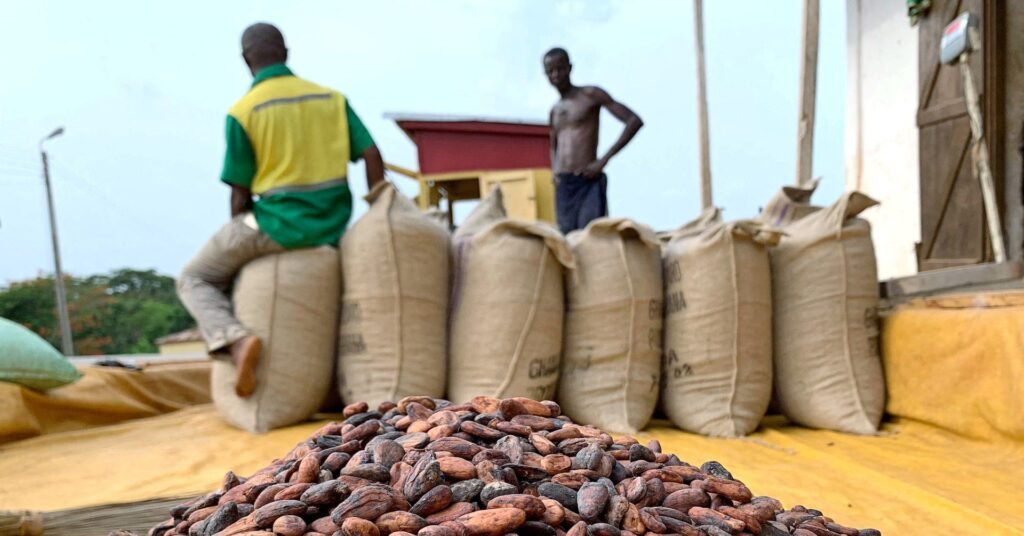
Some Ghanaians have expressed outrage following the government’s decision to reduce the cocoa producer price by 28.6%, from GH¢3,625 to GH¢2,587 per 64kg bag.
Finance Minister, Cassiel Ato Forson, announced on February 12 that the government had slashed the producer price to GH¢41,392 per tonne, equivalent to GH¢2,587 per bag, for the remainder of the 2025/2026 crop season, effective immediately.
According to the government, the reduction reflects a sharp decline in international cocoa prices and is intended to inject liquidity into the local cocoa sector to ensure timely payments to farmers.
The new price is based on 90% of the achieved gross Free On Board (FOB) price of approximately US$4,200 per tonne, aligning with current global market conditions.
International cocoa prices have dropped significantly from record highs of over US$12,000 per tonne at the end of 2024 to between US$3,700 and US$4,000 per tonne by February 2026.
The price adjustment also comes amid financial challenges facing the Ghana Cocoa Board (COCOBOD), which has reportedly recorded substantial losses and is grappling with debt and liquidity constraints.
Weak industrial demand as manufacturers cut down on cocoa grindings or reformulated products due to high costs has also contributed to the downturn in global prices.
The price cut is aimed at stabilising the sector and addressing immediate financial pressures.
However, the move has triggered strong reactions from sections of the public, particularly on social media.
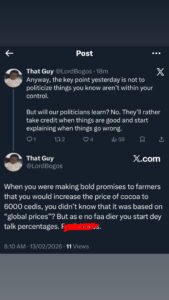
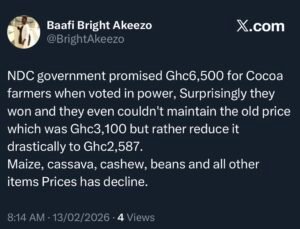
Some critics accused the ruling National Democratic Congress of failing to honour campaign promises.
“NDC government promised Ghc6,500 for Cocoa farmers when voted in power, Surprisingly they won and they even couldn’t maintain the old price,” one user wrote.
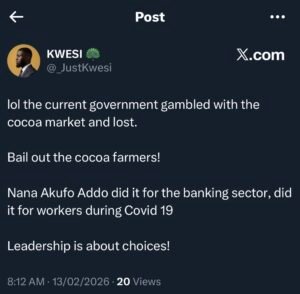
Others argue that the government should take measures to shield farmers from global shocks, saying, “Leadership is about choices!”
“This cocoa issue requires a sober national reflection, not political rhetoric. It should concern every Ghanaian. Cocoa farmers have propped up Ghana’s economy for decades. The next steps will be decisive.”
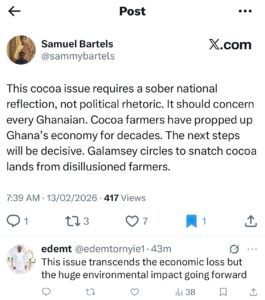
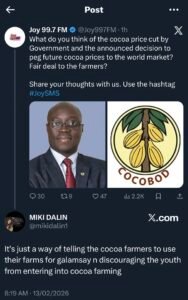
There are also concerns that the price reduction could push some farmers toward illegal mining activities, popularly known as galamsey, as they seek alternative sources of income.
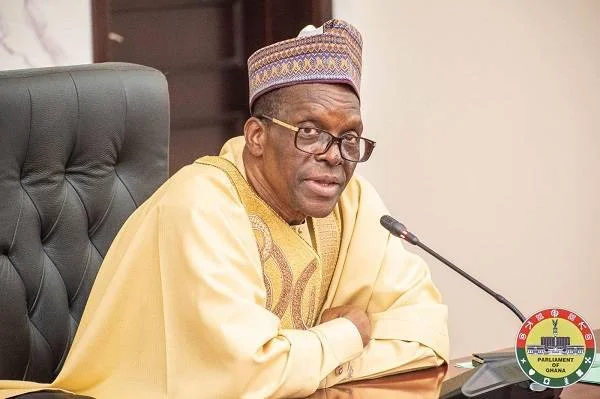
Minority Caucus in Parliament has also strongly rejected the new price, calling it “ridiculous” and “sacrilegious”.
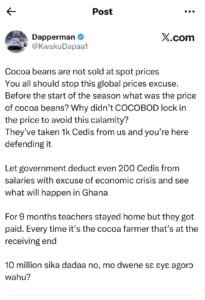
They demanded the immediate removal of the COCOBOD CEO and suggested that if farmers’ incomes are slashed by nearly 30%, public sector salaries should be reduced by the same margin to reflect the economic reality.