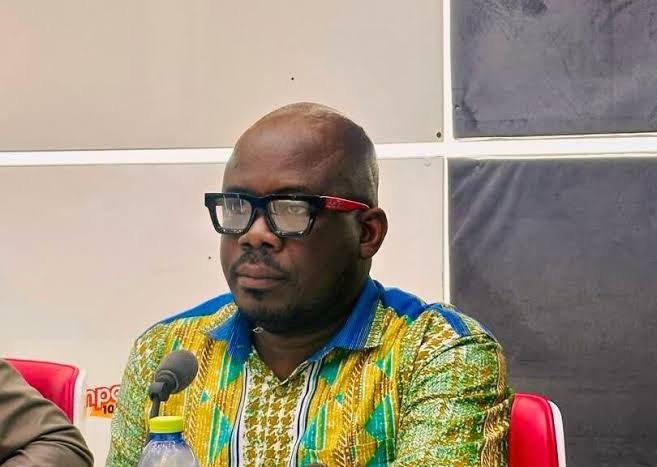
Deputy Communications Director of the United Party, Ebo Buckman, has accused politicians of treating the Ghana Cocoa Board (COCOBOD) as a source of funds to finance political parties, rather than managing it as a sustainable national institution.
According to him, successive governments have politicised the board by appointing individuals without the necessary management expertise and using inflated contracts as a means of diverting resources for partisan purposes.
Speaking on TV3 in and monitored by NewsDesksGH on February 6, Ebo Buckman called for partial privatisation of COCOBOD to reduce political interference.
“We should offload some of the shares of COCOBOD to the private sector. Let’s offload some on the stock exchange. Let private individuals also be share owners of COCOBOD. Even the farmers, we can give them an option to also be part owners of COCOBOD through shares. If you do that, then it becomes a collective thing,” he said.
He argued that political control of COCOBOD has turned the institution into what he described as a “cash cow” for politicians.
“But a situation where the politicians see COCOBOD as a cash cow. So when they come they throw in people who have no knowledge about management. Because that place is a cash cow. That is where they get money to finance their political parties,” he stated.
He further accused political actors of deliberately inflating contract values by two or three times their original cost, and added that such practices had become entrenched over the years and worsened under the administration of former President Nana Addo Dankwa Akufo-Addo.
His comments come amid growing concerns over COCOBOD’s liquidity challenges, which have left thousands of cocoa farmers unpaid for cocoa beans delivered as far back as November 2025.
On February 5, the Minority in Parliament, led by the Ranking Member on the Cocoa Affairs Committee, Eric Opoku, held a press briefing in which they alleged that COCOBOD was bankrupt and deliberately withholding more than GH¢10 billion owed to Licensed Buying Companies (LBCs), resulting in farmers going unpaid for nearly three months.
Following the Minority’s briefing, COCOBOD management appeared before Parliament’s Committee on Food, Agriculture and Cocoa Affairs, where officials were questioned over the failure of the board’s Self-Financing Model and delays in payments to LBCs.
COCOBOD also issued an official statement announcing that it had begun releasing funds to clear the arrears.
The board said it had paid GH¢6 billion to LBCs in November and January, with an additional GH¢620 million disbursed so far in February, attributing the delays to “logistical processing” challenges at the banking level rather than a lack of funds.