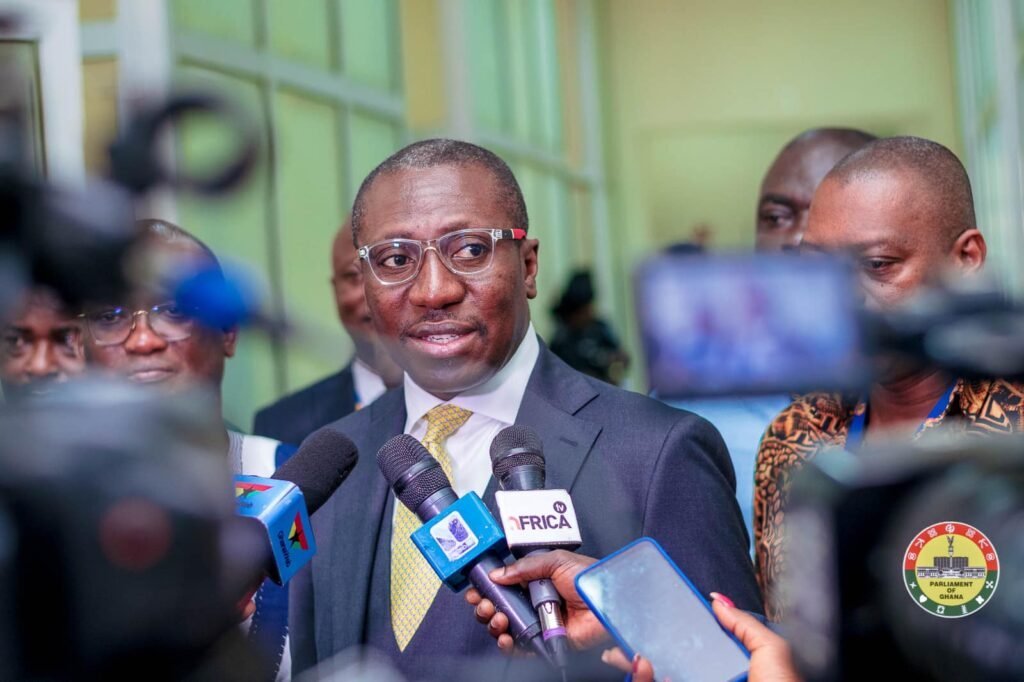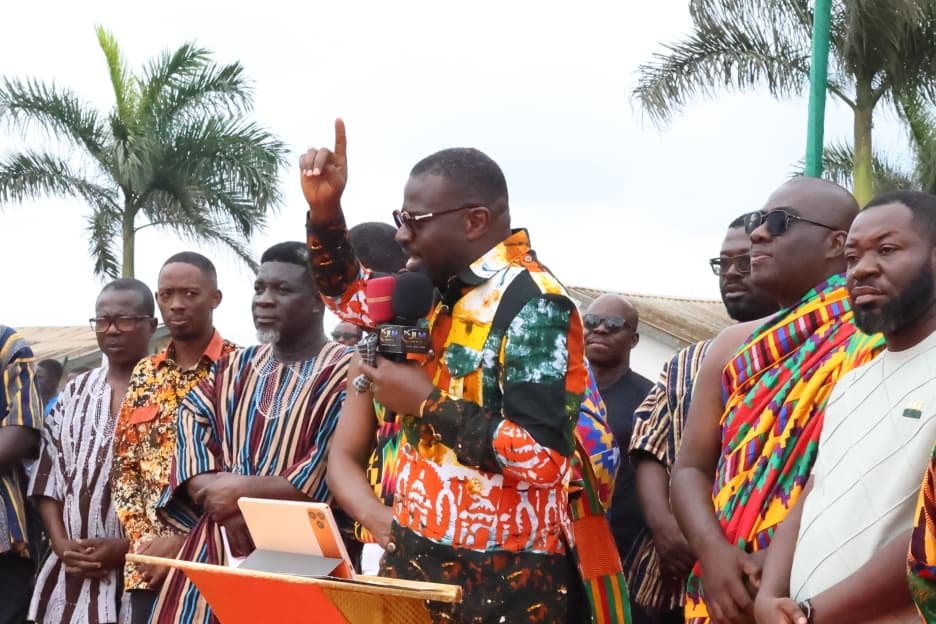
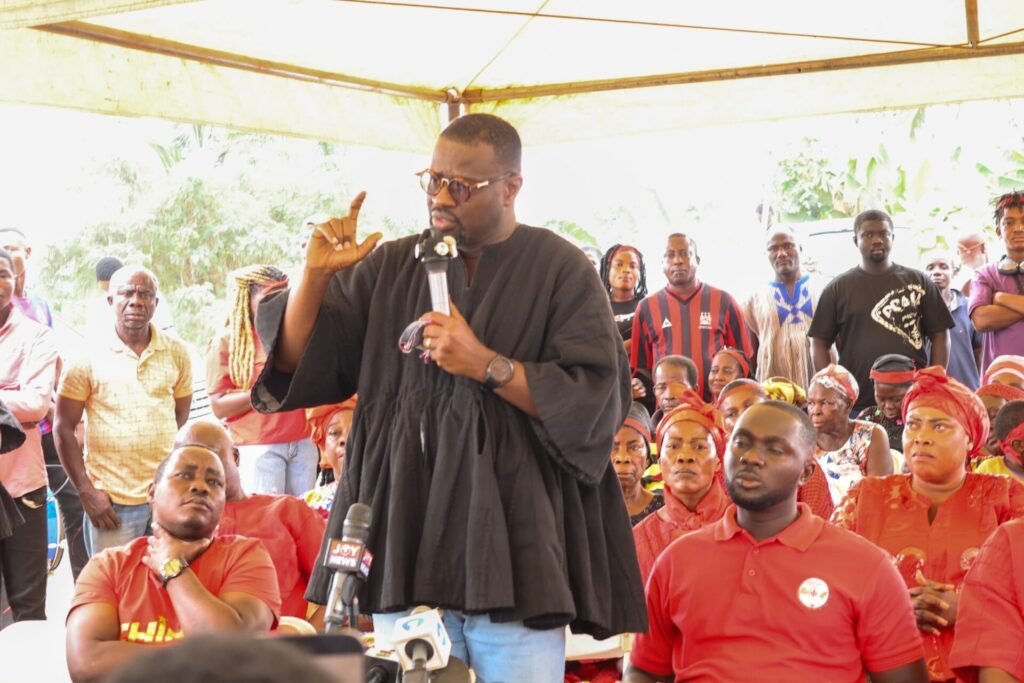
The growing controversy over the transportation of waste from Accra to the Adipa area of the Nsawam-Adoagyiri Municipality has intensified, with Minority Chief Whip and Member of Parliament for Nsawam-Adoagyiri, Hon. Frank Annoh-Dompreh, demanding answers from government over the decision to use the area as a destination for waste evacuated from the national capital.
Addressing the media at a press conference in the Yaw Adipa/Asiyaw Electoral Area, Mr. Annoh-Dompreh questioned the rationale behind the decision and called on the government to explain what informed the selection of the community.
He said the Minister responsible for Local Government should have been present in the community to engage residents and other stakeholders before the waste evacuation exercise commenced.
The MP’s intervention follows earlier concerns he raised over the evacuation of waste from Accra to the Adepa landfill. On September 24, 2026, he called for the suspension of the exercise until meaningful consultations were held with affected communities. He said residents had reported foul odours, flies and concerns about water pollution, while also questioning the level of stakeholder engagement.
“There was no engagement. The chiefs and the people in that area were not engaged. The local assembly was not engaged. Assemblymen, the MP of the area, all the stakeholders were not engaged,” Mr. Annoh-Dompreh said in his earlier comments.
At the press conference, the MP broadened the discussion beyond the immediate dumping operation, linking the controversy to Ghana’s obligations on sustainable waste management. He referred to the Millennium Development Goals and the subsequent Sustainable Development Goals, particularly SDG 11, which addresses sustainable cities and communities.
Mr. Annoh-Dompreh argued that Ghana, as a signatory to the Sustainable Development Goals, should ensure that waste is transported, handled and disposed of in a manner consistent with sustainable environmental management.
He also referred to the governing party’s manifesto, saying it contains commitments relating to sustainable waste disposal and management, and questioned what had changed in the approach to the handling of waste.
“What has changed? What has changed?” he asked, calling on government to explain the policy considerations behind the decision to move large quantities of waste from Greater Accra to the Eastern Region.
Residents Raise Environmental and Health Concerns
The Assembly Member for the Yaw-Adipa Electoral Area, Hon. Emmanuel Asamoah, also addressed the press conference, presenting a list of concerns attributed to residents of the community.
According to Mr. Asamoah, the area had for some time received waste, but the current influx of refuse from Accra had significantly increased pressure on the community.
He alleged that residents were being exposed to large quantities of uncovered waste, unpleasant odours, pests and other environmental concerns. He further claimed that runoff from the site during rainfall had affected local drainage systems and raised concerns about possible contamination of groundwater.
These environmental and health concerns were presented by the Assembly Member and residents at the press conference and have not, based on the available reporting, been independently established through a published environmental or health assessment.
Mr. Asamoah further alleged that the accumulation of waste had contributed to increased risks associated with rodents and insects and expressed concern about possible public-health implications for children, elderly residents and other vulnerable groups.
He also raised concerns about security around the dumping area, alleging that inadequate oversight had created opportunities for illegal nighttime activities.
According to the Assembly Member, the community was facing broader social and economic consequences, including concerns about property values and the quality of life of residents.
Five Demands Put Before Authorities
The community, through its representatives, presented five immediate demands.
First, residents called for an immediate suspension of waste-dumping activities at the site.
Second, they demanded an independent environmental and health impact assessment of the dumping sites currently in use.
Third, they called for a comprehensive cleanup and decontamination exercise in affected areas, with the cost borne by the responsible parties and relevant local authorities.
Fourth, they demanded the installation of permanent security barriers and surveillance systems to prevent unauthorised dumping and improve security around the site.
Finally, they called for a public forum within seven days at which municipal authorities would present a transparent, long-term waste-management strategy that takes residential communities into consideration.
Mr. Asamoah stressed that the community was not opposed to properly regulated waste management. Rather, he said residents objected to what they regarded as the use of their community as a convenient destination for waste generated elsewhere.
Seven-Day Ultimatum
The Assembly Member subsequently issued a seven-day ultimatum to the responsible authorities to respond positively to the demands.
He warned that if no satisfactory action was taken, residents could consider measures aimed at preventing access to the dumping sites, including blocking roads leading to the facilities.
Mr. Annoh-Dompreh, however, emphasised that any action taken by residents must remain within the law.
“We are not fighting government,” he said, explaining that his role as a Minority MP was to represent the concerns of constituents and demand accountability rather than confront the state outside constitutional and legal processes.
He stressed that residents had a right to live in a clean environment and said government could not restrict their lawful right to raise concerns about conditions affecting their communities.
The MP further expressed support for lawful forms of civic action through which residents could express their concerns and draw attention to issues affecting them.
The Wider Waste Evacuation Exercise
The dispute comes against the backdrop of government’s ongoing national waste-evacuation programme, under which large quantities of accumulated waste are being removed from parts of Accra, including Agbogbloshie.
Reports indicate that the government launched the exercise as part of efforts to address long-standing sanitation problems in the capital, with the evacuated waste being transported to designated landfill facilities. The programme is expected to involve significant quantities of waste and the deployment of heavy equipment and trucks.
The decision to transport waste to the Nsawam-Adoagyiri area has, however, generated opposition from residents and the area’s MP, who argue that affected communities should have been consulted before the operation began.
The controversy therefore centres on a broader question: how Ghana can address Accra’s waste crisis without transferring environmental and public-health concerns to communities receiving the waste.
Mr. Annoh-Dompreh is now calling for government to listen to the concerns raised by residents and engage them on a sustainable solution.
“The President should turn a listening ear to the people’s cry,” he told the gathering.