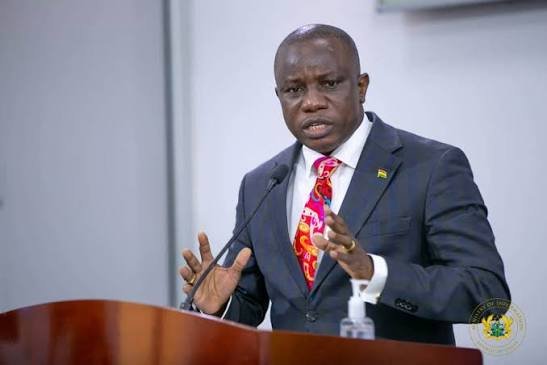
Former Minister of Defence and Member of Parliament for Bimbilla constituency, Dominic Nitiwul, has described the government’s Nkoko Nkitinkiti programme as a breeding ground for corruption.
According to him, the poultry initiative lacks the critical support systems needed for it to succeed and risks becoming wasteful and corrupt.
Speaking on Channel One TV on February 19 as observed by NewsDesksGH, the former Defence Minister criticised the structure of the programme.
“You do not give them feed, you don’t give them medicine to keep the poultry. Please. It’s just like planting trees during the dry season.”
He warned that the initiative would most likely be investigated in the future if a new government takes over.
“It’s a route for corruption, you will see. You will see that in a change of government, this matter will be investigated and you’ll see people would be jailed for it.”
The Member of Parliament, who is currently a member of the parliamentary committee on Food, Agriculture and Cocoa Affairs on the ticket of the New Patriotic Party, insisted the policy was flawed from the start.
“Trust me. It’s corruption, nothing else. It’s like telling me you’re going to plant trees during the dry season when you know the trees will die. It’s the same thing. If they give this to farmers, you know the birds will die because you’re not giving them funds, veterinary extension.”
While he expressed willingness to support measures that genuinely strengthen the poultry sector, he refused to support what he called tokenism.
“If you want to support the poultry industry there’s a way of supporting the poultry industry. Their basic needs. Reduce feed imports and make sure there’s market for their goods.”
“Akokonkitinkiti and all that, it’s tokenism. They just want to do it because they promised. But they’re wasting money, seriously,” he added.
Nkoko Nkitinkiti or Akokonkitinkiti is a flagship poultry revitalisation programme launched in November 2025 by President John Dramani Mahama under the broader Feed Ghana Programme.
The initiative aims to reduce Ghana’s reliance on imported frozen chicken and achieve 100 percent self-sufficiency in poultry production within three years.
Under the programme, government plans to distribute three million poultry birds to about 60,000 households across all 276 constituencies. Each household is expected to receive 50 day-old chicks, starter packs of branded feed and technical guidance.
A commercial-scale component also targets 50 anchor farmers, who are each to receive 80,000 chicks and logistics support to produce a combined four million birds annually.
Government projects the initiative could save between $300 million and $400 million annually in poultry import costs.